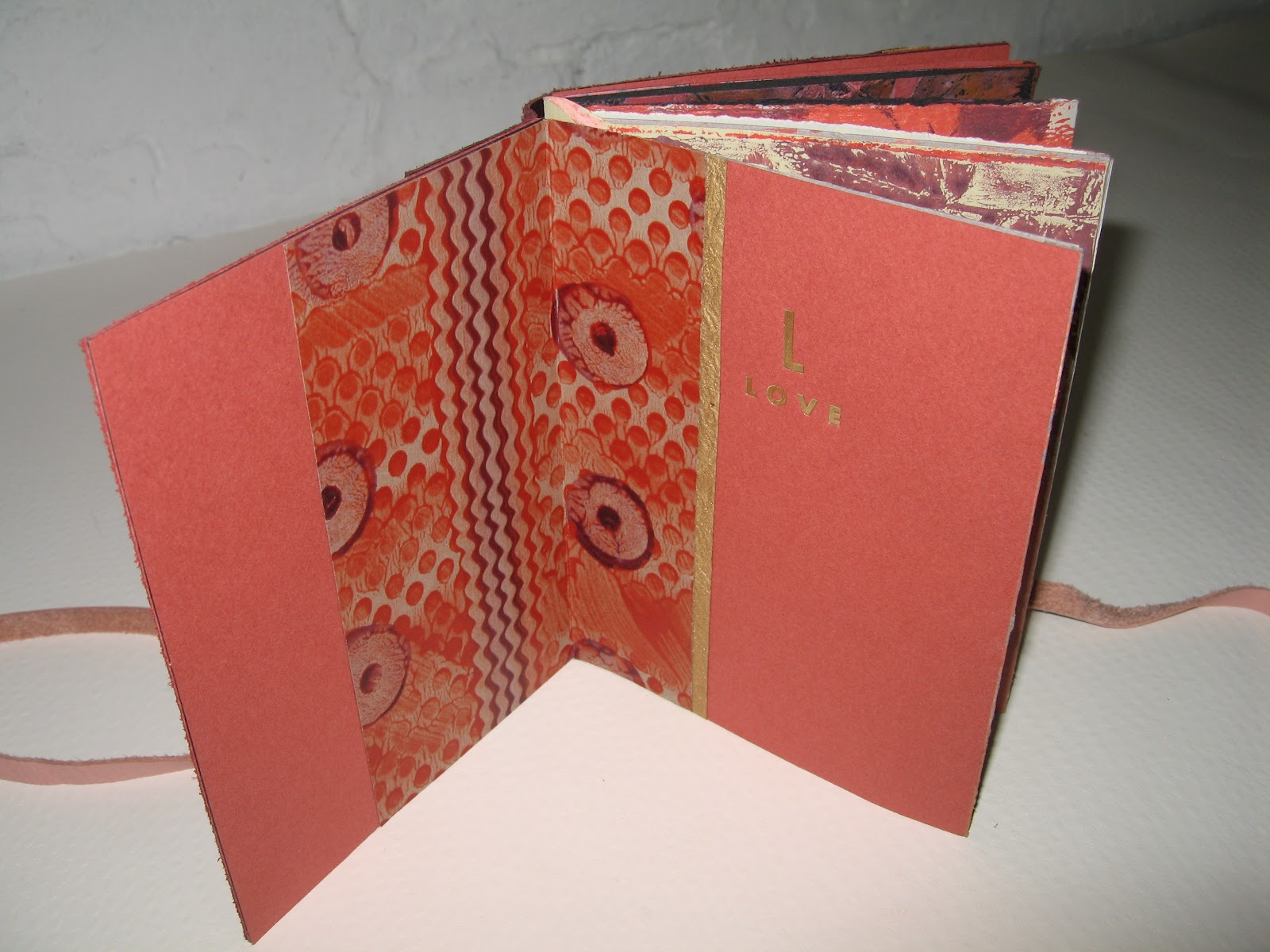
My entry for Smokin' Hot Invitational Exhibit/Auction


In Greek mythology, the Pleiades, meaning the doves, was the name given to the seven daughters of Atlas and Pleione. 
Their names were Maya, Taygete, Halcyone, Celaeno, Sterope, Merope and Electra. 
Electra is considered the “Lost Pleiad.” The legend came about most likely to explain why only six stars are easily 
visible to the unaided eye. Electra was the sister who veiled her face at the burning of Troy 
out of shame for marrying a mortal, thus afterward appeared to mortals only as a comet.


The dove is the symbol of purity, unconditional love and the   harbinger of peace.
Mythology associates doves with the Mother goddesses such as the Persian Ishtar, the Roman Venus, 
the Egyptian Isis, and the Christian Holy Spirit...as the savior of humanity.
 A white dove, seen flying overhead, is considered a very good omen, 
and many people stake their luck for the coming year on the cry of a dove.
This is the flyer describing my exhibit for the UNE Writer's Conference
Memory, Identity & Testimony

The Colonial Theater

March 31, 2012
I have created an entire "theater" at the Westbrook campus of the University of New England for the Writer's Conference exploring: Memory, Identity and Testimony. A number of my artist's books and installations explore these subjects. 

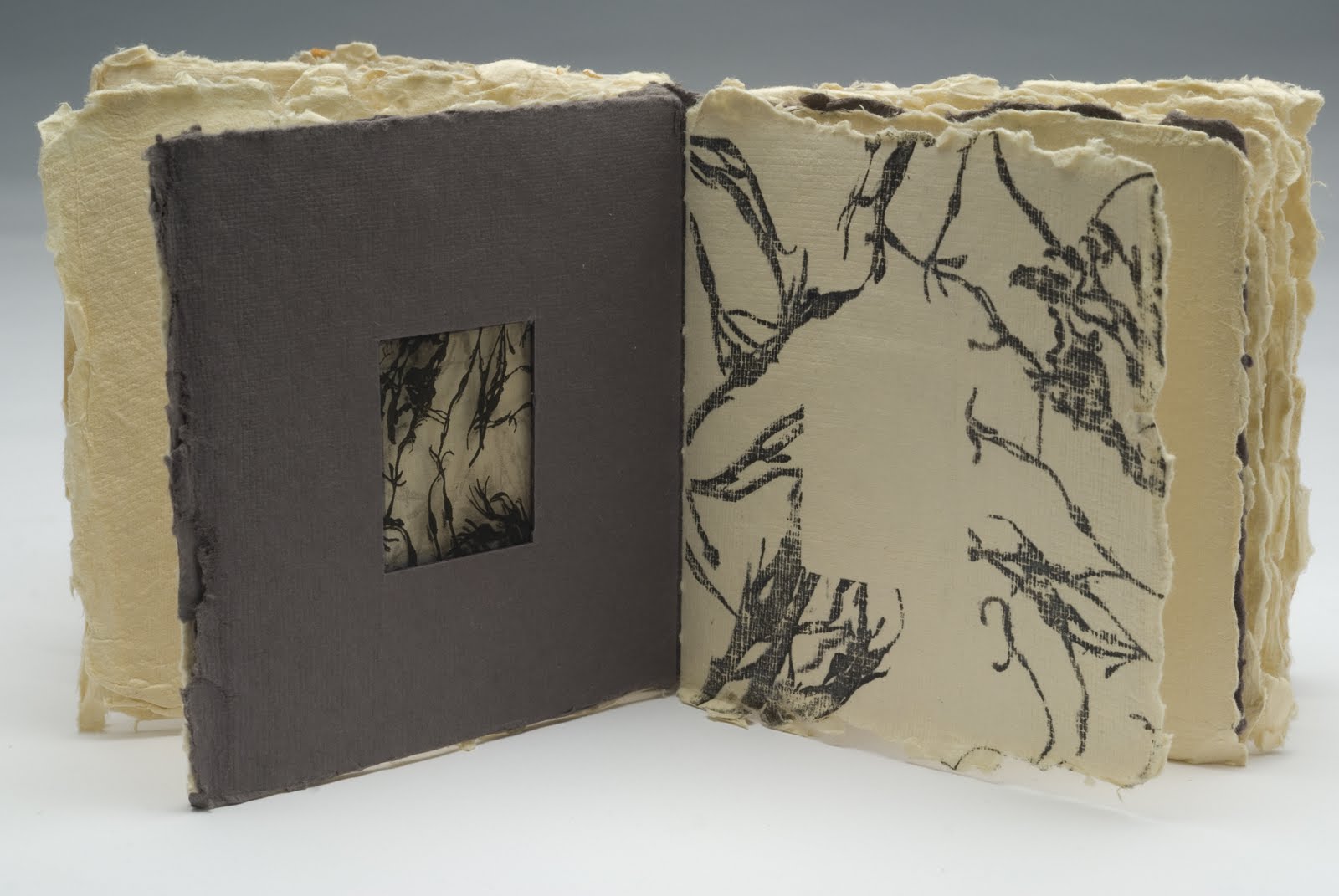
Fragments

In this book I have explored different ways of looking at a fragment, which makes a pleasing whole in its self. I enjoy making collage for the same reason. Scraps of disparate pieces brought together, where torn edges, raveled threads and happenstance meld; where imperfection becomes the aesthetic.


4.5" x 4.5"
Coptic Binding on book board
Handmade paper, gelatin prints, thread, linen, tissue, 
acetate, collage, pochoir, transfer prints, gouache.
One-of-a-kind


Offspring is a Coptic-bound wooden album of mixed media: monoprints, handmade rubber stamps, cyanotypes... celebrating the majesty of trees through its offspring...leaves, seeds, nuts, cones, pods, fruit, flowers and pollen.


4.5" x 5.5"
A handmade Precious metal clay and acorn knob.
Handmade rubber stamps, gelatin prints, printing from actual plant material, 
cyanotypes, rice paper, on black album paper in a preexisting wooden coptic book. 


Jack-In-The-Pulpit is an accordian-style book I created at the culmination of a week-long book arts intensive at Stone House in Freeport, Maine in 2010. I have incorporated many of the techniques and media explored as well as a poem I have written about the flower that I love. Linoleum block printing, paste papers, gelatin prints, pop out sculpture between purple linen book boards with a window in the cover. Cover 7.5" x 5.5"

JACK IN THE PULPIT
Sweet & burnt 
like butter scorched

Blood & veins give birth 
to red hot
berries
       Fill the 
       cavity

A POEM GROWING
Fleshy 
spathe
Leafy 
bract


The Flea Circus tent was cut from Folia card stock (acid and lignin free.)  Pieces were stitched together to make a top then star shapes were cut into it, bringing light into the arena as well as creating a pattern. A paper punch was used to make the impression of polka dots on the semi circular flaps, which cast shadows and patterns when lit. The letters on the Flea Circus sign are cut from paste paper and decorated with gold colored glitter. There are 4 layers of flea performers, some interacting (for example one flea holds a ring that another flea from the next layer is jumping through.) All of the printing was done with handmade rubber stamps. A replica of an early circus poster incorporates the colophon information. Approximately 5.5” x 7.5” (16” circumference)


I am fascinated by Flea Circuses. Although many were bogus, a number through the ages used actual fleas, the human flea. Raised on the trainer’s blood to maturity, requiring intense training and care for a short acting career before its life cycle ended. 
The 19th century was the grand era of the flea circus although they were an attraction at least a century earlier. Minute harnesses made of the lightest of gold, silk or hair required the expertise of blacksmiths and watch makers demonstrating their skills. Craftspeople also fashioned tiny circus apparatus such as bicycles, canons, coaches and swings. Natural flea behavior of running, jumping, kicking could be adapted to give the appearance of actual circus acts.  

Sin Weavers

The Inca civilization did not have a written language, instead they relied on an intricate means of recording different types of information. Accounts, history, stories, poems, astrological information were kept on a device known as a Khipu. Through pattern variations, dyeing, spinning and plying of strings as well as the different types, number and positions of knots, the number of soldiers and captives, every birth, or the age of each man, woman and child was represented. The Khipu documented marriages, deaths, laws, ceremonial practices, economic transactions, size of various crops and wares in the ruler’s storehouse.

Although they have not been deciphered, during the Spanish era the Inca conquerors claimed they came to 
understand the meaning and purpose of these complex woven records.

In early 1600 the head of the Jesuit order in Peru reported that the native people used Khipu to record their sins so they would remember them for confession. Certain colors of string came to represent the type of sin. For instance, red for sexual sin; black for killing someone; vivid orange-red stood for thievery; yellow for hypocrisy and white, a venial sin. Some added stones, bones, feathers and other natural material as symbols of the sins committed. 


"Text" was created for an exhibit in Vilnius Lithuania, the 5th International Artist's Book Triennial 2009. I chose to interpret the given title with a box (6" x 7" x 3" D) covered with graffiti and containing 4 wooden scrolls, each with a different expression of "text": Braille (the word "text" repeated,) a Khipu (knotting of the ancient Incas,) a polished piece of wormwood, and a palimpsest typewriter ribbon from which all the words had been washed and the logo "text" typed on. In the bottom was an accordian-style book covered with black book cloth,
 the inside covers made of handmade paper with letters suspended in the pulp, 
each page represented one of the scrolls.
The Bird's Book is an artist's book I completed in 2008. It is build on the notion that a nest can be read. It has 5" x 3.5" wooden covers with real birch bark laminate. The cover has a small mica window containing an egg (made of clay.)  The 18 pages are bound in the coptic style.
Please watch the video below as I describe each page and you can read my poem.  
Green is a book which intends to bring awareness to the choices we have in caring for our environment— reducing the use of harmful chemicals, fertilizers and pollutants, planting for smarter use of water and other resources, acknowledging the benefit of wild and useful plants, and considering our impact on nature. 

 8.5" x 8.5" Album-style binding on book board 
Cover: Gelatin print, foil stamped title 
Handmade paper with wild flower seeds, acetate, collage, hand painting, photo transfers, quilling, a flag book inserted, gelatin prints on Canson paper, rubber stamps, hand writing. One-of-a-kind